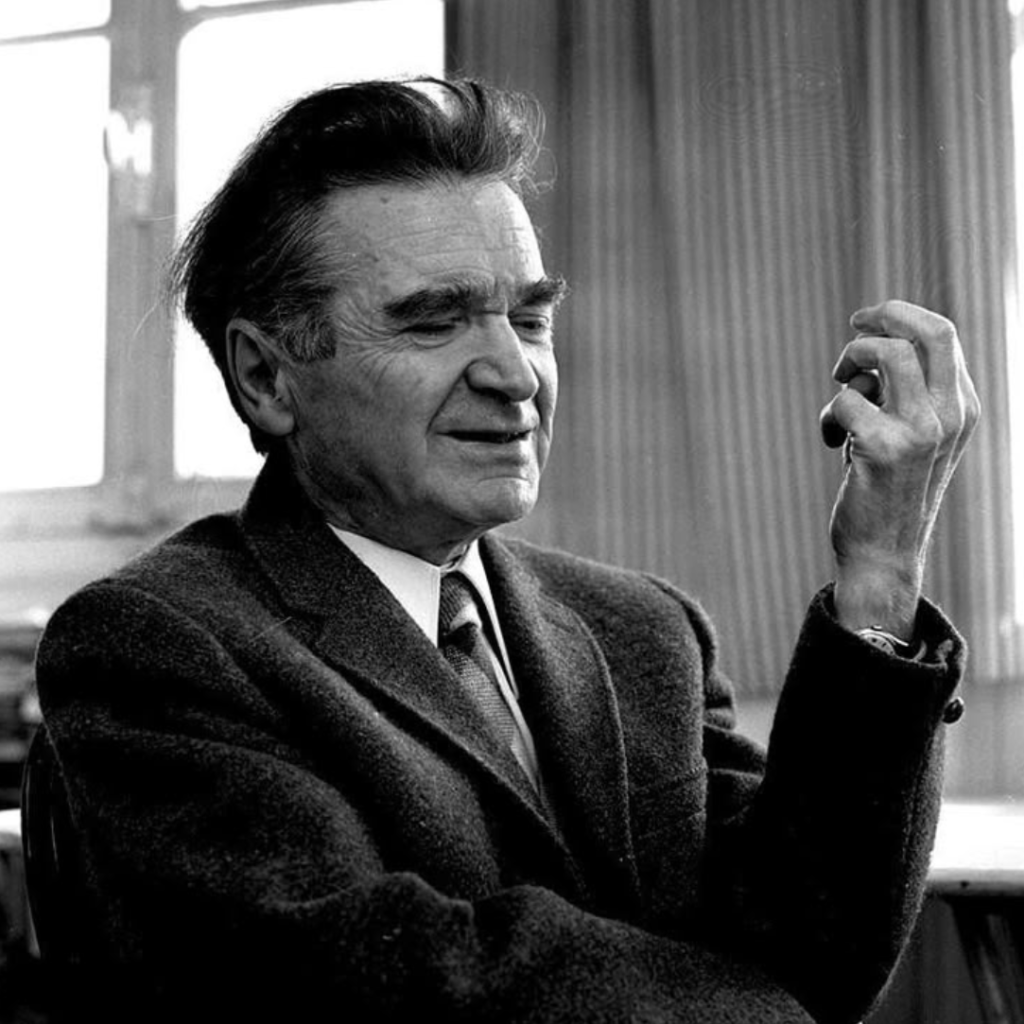
I always wondered what happened in the moments that come after realizing that you will die. I personally, began to read philosophy, and that event of realization was, in retrospect, the most important thought to ever cross my mind. It sparked a deep and inspirational curiosity in me. Some times people recognize the thought, accept it, and move on; instead of a philosophical pursuit, they are motivated to achieve tangible goals, start a business, or perhaps a family.
Others are beaten down by their discovery. It becomes the small beating center of life that everything else dreadfully orbits. Emil Cioran surely felt that way in his The Trouble With Being Born. It is the strangest book I have ever read, and one of the most depressing. It’s a collection of aphorisms, and in it, feelings about memory, death, birth, love, and meaninglessness are analyzed, focusing on the idea that the greatest tragedy of life does not arrive at death, but instead with birth.
The Meaninglessness of Existence
In chapter 2, Cioran writes.
“This very second has vanished forever, lost in the anonymous mass of the irrevocable. It will never return. I suffer from this, and I do not. Everything is unique–and insignificant.”
He makes the observation that time is irreversibly lost. Although he seems to be just as indifferent to it as he is affected by it. He recognizes this loss, and he understands it to be terrifying and negative. But he also understands the universality of that loss. Time has always passed; death has always occurred, and it will continue to do so.
Cioran’s acceptance isn’t a cliche display of rebellion; it’s a therapeutic affirmation. By that same notion, Cioran is freed in his state of indifference. Which is why he also recognizes the precious significance of every moment and, simultaneously, each moment’s triviality.
Why Aphorisms?
Only a few of Cioran’s insights struck me. In each chapter, I would mark a star on the top left corner of every aphorism that intrigued me, and I was averaging about 7 or 8 stars per chapter, and even of those, I could shorten the number to 3 or 4 that I felt a strong connection to. And this experience ironically leads me to what I think is a distinguishing attribute of Cioran’s personal philosophy.
It would have seemed sensible for Cioran to construct some sort of treatise that encompasses each of the themes discussed within his book. To develop, even if sketchily, a general theory around his nihilism that perhaps presented arguments to support his statements, or presented itself as a solution to suffering or a contemporary problem. As an established author, such ideas must have crossed his mind. Instead, he outright rejects the idea of such organization. He notes.
“To seek coherence is to fabricate a lie.”
This is what sets Cioran apart. His sheer and utter commitment to his ideology of contradiction and despair, to perform a literary completion, is a sorry attempt to rescue one’s impermanence. He diagnoses any progress towards a legacy as a failure to accept death.
This is why his writing is fragmented, personal, and crushing. It is evident now why the observations he makes are left in their aphoristic form. To construct a monumental and convincing argument for the masses is just as pointless as not writing anything down at all.
You may have noticed the blaring contradiction. Cioran himself is an author, but his discernment lies in his compulsion to write. Almost as an inhibition sets anybody back, Cioran confesses that he cannot not write. And oddly, he is not arguing that because of the pain of life, and its absurdity we should all become misanthropes and hermits. He is just writing, without the goal of convincing anybody to think like him.
Maybe he was unsuccessful in accepting death and squashing his inner desire to escape it, or maybe what he did instead was normalize it in exhaustion; death became a natural understanding of the progression of things, it was not a drama, and there was no event.
Cioran now lies at rest with his partner Simone Boué in the Montparnasse Cemetery in Paris, France.