I was initially introduced to the concept of universals in my first philosophy course in college. It is one of the oldest and most persistent problems of metaphysics. The problem questions whether or not the similar recurring properties of objects called universals exist independently of the objects themselves or not.
A universal is commonly defined as a nature or essence signified by a general term.
Essentially, universals are what explain sameness across a group of things; they account for the redness in roses, the roundness in spheres, and the beauty in art. The metaphysical fork appears when the existence of universals is accepted or refused.
Picking Sides
Realists believe that universals exist abstractly, the same way that numbers do. Universals cannot be measured, have no location in the universe, but still have a legitimate mode of being, and provide a utility for grasping concepts.
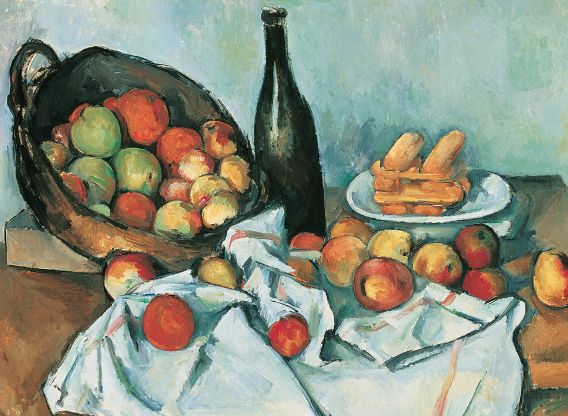
Nominalists refuse to accept the legitimate existence of universals and instead assert that only particulars exist. Particulars are all of the physical objects that surround us, and it is within these particulars that qualities are observed and given general names and labels. Thus, apples only share the linguistic classification of being “red” rather than possessing the actual universal quality of redness.
Platonic Realism
The earliest arguments for realism were presented by Plato in his theory of forms. In it, he states that there are perfect representations of all concepts called forms. These forms exist beyond space and time, and all particulars are mere shadows of the forms. So all cats are made in likeness to the form of a cat, and all specific instances of the color red are made in likeness to the form of red.
Although Plato’s theory of forms is incredibly important, rebuttals against it have successfully deemed it as unconvincing. For example, the third man argument begs us to imagine where the “form” of a concept derives its essence. If the form of the color yellow is just yellow, then it seems to require a separate source of its yellowness besides itself, leading to an infinite regress.
And the idea of a realm of existence, particularly for the forms, causes one to take a faith-based leap. How are we to logically conclude the existence of such a realm when it is unobservable to us, and we cannot empirically prove the existence of its constituent forms?
This sort of dialectical exchange between realists and nominalists has evolved over the ages and encouraged the creation of more robust arguments. Now, many forms of realism and nominalism exist.
I think the main thing to treasure in this debate is how it forces us to think about true knowledge and discovery. When we make observations, rules, and generalizations, are we advancing our understanding of the world by discovering universal facts? Or are we simply assigning labels to patterns that we observe?